 +
+ +
+ +
+


Use code 'BAY' for an extra 7% OFF | Authorized Premium U.S. Reseller
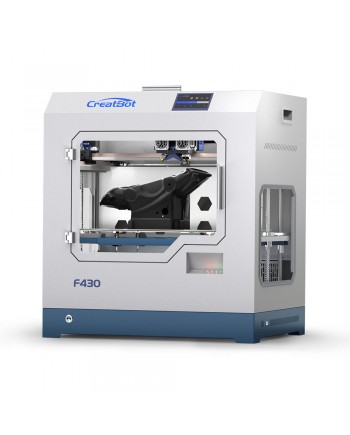
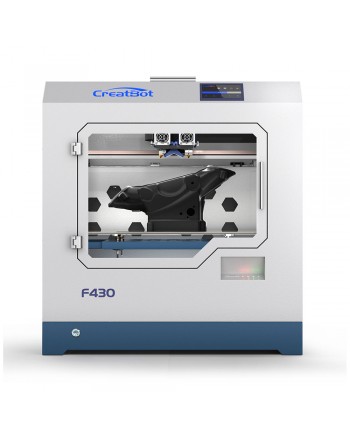
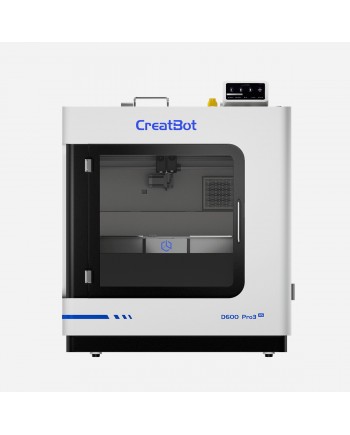
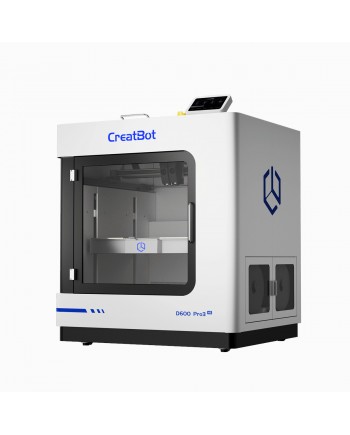
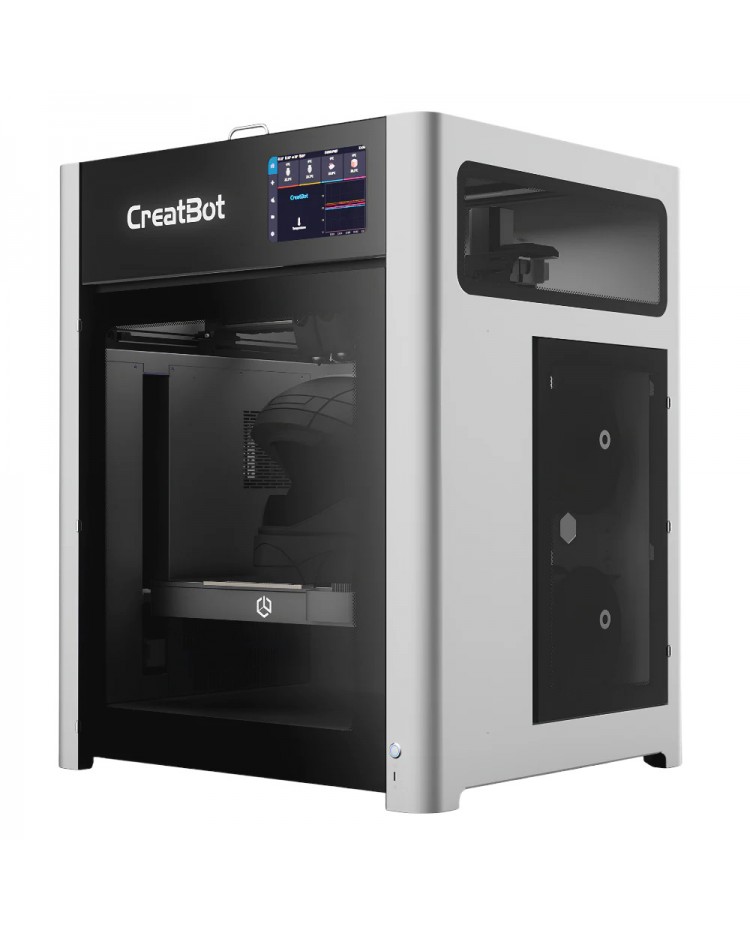
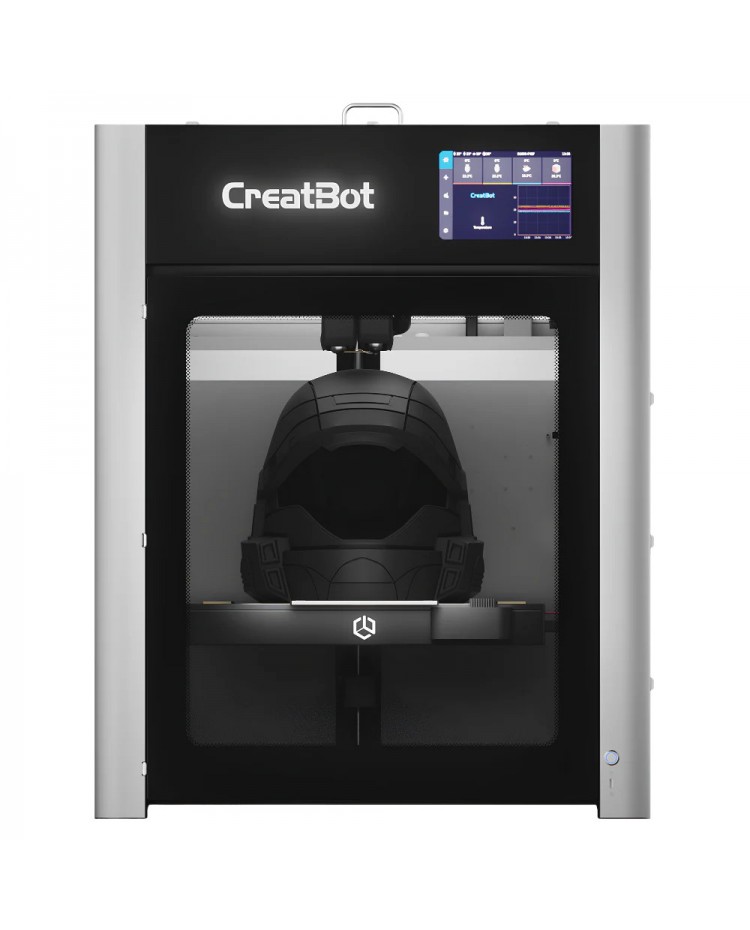
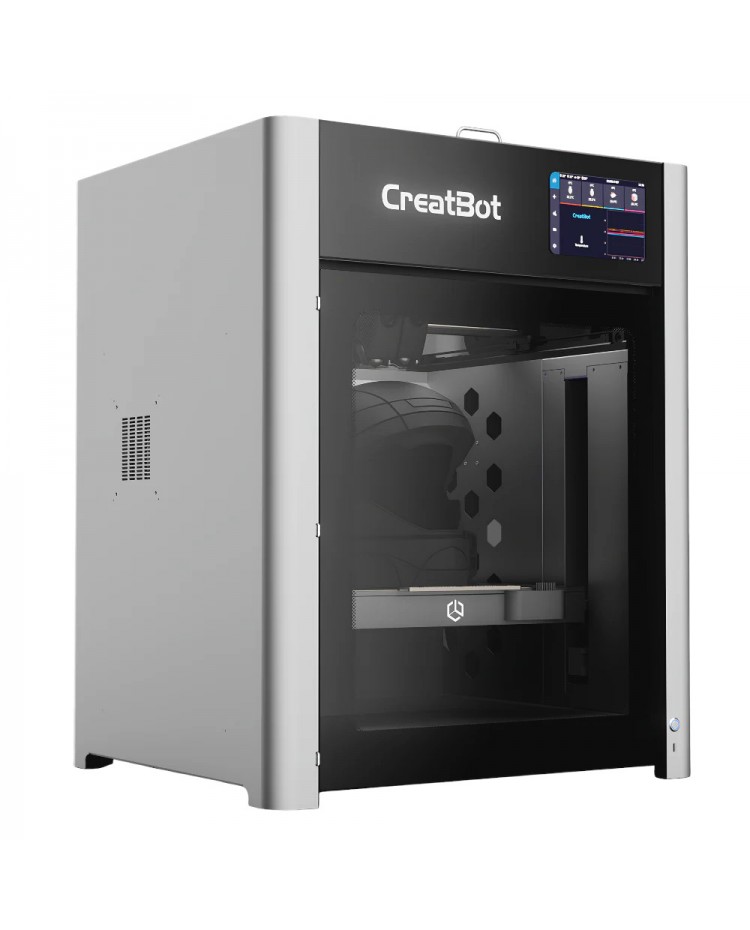
CreatBot D400 HS Dual-Nozzle High-Speed 3D Printer – 420 x 400 x 420mm Build Volume
The CreatBot D400 HS is a professional-grade desktop 3D printer built for shops and engineering teams that need industrial output without an industrial footprint. Sharing its core architecture with CreatBot's flagship D600 Pro3 HS, the D400 HS pairs a reinforced motion system with Klipper firmware to hit sustained print speeds of 300mm/s and a peak volumetric flow rate of 90mm³/s. With a heated chamber, dual auto-rising extruders, and support for high-performance engineering filaments, it's designed for teams who need repeatable, large-format prints without the warping, misalignment, or downtime that typically come with scaling up.
Key Features at a Glance
- Large 420 x 400 x 420mm single-extrusion build volume (365 x 400 x 420mm in dual-extrusion mode)
- 300mm/s stable print speed with 90mm³/s peak flow rate
- Dual auto-rising extruders with hotend temperatures up to 420°C
- 70°C actively heated chamber with dual-layer insulation
- Automatic eddy current bed leveling accurate to 0.001mm
- Fully automatic dual-nozzle XYZ offset calibration via HD camera and dual photoelectric sensors
- Automatic dual-nozzle shutter system to eliminate oozing and cross-contamination
- True external air cooling with a medical-grade pump for quiet, consistent operation
- HEPA + activated carbon air filtration rated at 99.995% particle adsorption
- Power-loss recovery, filament run-out detection, and automatic backup nozzle switching
- Removable magnetic build plate rated above 100°C
- WiFi, LAN, USB, and offline local control with remote camera monitoring
- Broad material compatibility including PLA, ABS, ASA, PETG, PC, Nylon, TPU, and reinforced composites like UltraPA-CF and PPS-CF
Built on Proven Industrial-Grade Architecture
The D400 HS inherits its structural design and firmware foundation from CreatBot's large-format D600 Pro3 HS, which means the engineering behind it has already been validated at scale. Rather than treating high-speed printing as an add-on, CreatBot re-engineered the motion system, hotend, and frame together so that speed doesn't come at the cost of accuracy. The result is a machine that behaves like an industrial printer while still fitting on a desktop.
Why This Matters for Prototyping and Production
Teams producing functional prototypes, jigs, fixtures, or short-run end-use parts need a printer that won't introduce dimensional drift between print jobs. The D400 HS's reinforced X rail and tuned motion components are built to hold tolerance even at sustained high speeds, so parts coming off the printer today match parts printed weeks earlier.
High-Speed Dual Extrusion Without the Trade-offs
At the heart of the D400 HS is a smart auto-rising dual-extruder kit capable of heating to 400°C in roughly two minutes, with a thermostat accuracy of ±0.15°C. Each nozzle can reach up to 420°C, opening the door to advanced engineering filaments that lower-temperature printers simply can't process.
Dual Nozzle Shutter Technology
A mechanical shutter automatically seals the idle nozzle the instant it lifts away from the print, physically blocking oozing and material cross-contamination. For multi-material and multi-color prints, this means cleaner transitions and fewer failed jobs.
Automatic Backup Nozzle Switching
If filament runs out on the primary nozzle mid-print, the D400 HS automatically switches to the secondary nozzle to keep production moving, reducing the chance of a ruined print on long jobs.
Active 70°C Heated Chamber Engineered to Prevent Warping
Large-format printing introduces a problem most desktop printers ignore: as chamber temperature rises, the printer's own frame can expand and shift, quietly degrading print accuracy over time. CreatBot addresses this directly with an intelligent chamber heating algorithm that anticipates and compensates for this thermal drift, so the machine keeps printing accurately even as internal temperatures climb toward 70°C. Combined with dual-layer insulation cotton, the chamber reduces thermal stress, improves interlayer bonding, and keeps engineering plastics like ABS from cracking or delaminating during long prints.
Ideal for Engineering-Grade Materials
Materials like UltraPA-CF, which can achieve roughly 80MPa of strength and withstand heat up to 150°C, need consistent chamber conditions to print reliably at scale. The D400 HS's heated chamber is built specifically to support these higher-performance filaments rather than treating heat as an afterthought.
Precision Calibration That Runs Itself
Getting the first layer right is the single biggest factor in print success, especially on a 420mm-wide platform. The D400 HS automates the entire calibration chain:
Eddy Current Bed Leveling
A non-contact, zero-wear electromagnetic sensor scans the full bed in about 60 seconds, achieving 0.001mm probing accuracy — a dramatic improvement over traditional contact-based leveling methods, and roughly 80% faster.
Dual-Nozzle XYZ Offset Calibration
XY offset is calibrated automatically via an HD macro camera using AI visual recognition to 0.02mm accuracy, while Z offset is handled through dual photoelectric sensors for 0.005mm precision. Together, this removes the manual calibration guesswork that typically comes with dual-extruder machines.
Cooling and Air Quality Built for Continuous Operation
A medical-grade air pump delivers steady external cooling directly to the print with minimal noise, rated for 24/7 use in professional environments. A dual-stage HEPA and activated carbon filtration system captures fine particulates and absorbs VOCs and odors at up to 99.995% efficiency, making the D400 HS more practical to run in shared office or workshop spaces.
Reliable, Flexible Connectivity
The D400 HS supports WiFi, LAN, USB, and fully offline local operation, so print jobs, firmware updates, and printer control aren't dependent on an internet connection. Remote camera monitoring lets operators check on speed, pause status, and temperature from an app, which is especially useful for long, unattended large-format prints.
Built-In Failure Protection
The printer automatically saves its position during a power outage and resumes exactly where it left off once power is restored. Combined with filament run-out detection that pauses printing before a job fails, the D400 HS is designed to protect long print jobs from common points of failure.
Magnetic Build Plate for Fast, Clean Part Removal
The proprietary magnetic build surface is heat-resistant above 100°C and resists demagnetizing over time. For large or oversized prints, it allows quick, flat-bottomed part removal without damaging the model or the plate.
Technical Specifications
| Printing | |
|---|---|
| Print Technology | FDM/FFF |
| Build Volume | Single Extrusion: 420 x 400 x 420mm; Dual Extrusion: 365 x 400 x 420mm |
| Number of Nozzles | Double |
| Auto Rising Extruders | Yes |
| Layer Resolution | 0.05mm |
| Filament Diameter | 1.75mm |
| Filament Compatibility | PLA, ABS, ASA, PP, PETG, PC, Nylon, TPU, ABS-CF, PC-CF, PET-CF, PET-GF, UltraPA-CF, PPS-CF, PA-GF, PA-CF, PA-ABS, PC-ABS, PP-GF, PP-CF |
| Nozzle Diameter | 0.6mm standard (0.3, 0.4, 0.6, 0.8, 1.0mm optional) |
| Temperature | |
| Max Nozzle Temperature | 420°C |
| Max Bed Temperature | 120°C |
| Hot Chamber Temperature | 70°C |
| Speed | |
| Max Print Speed | 300mm/s |
| Flow Rate | 90mm³/s |
| Electrical | |
| Power Requirements | 110–240V, 50–60Hz |
| Display | 7-inch touchscreen |
| Rated Power | 2500W |
| File Transfer | USB / U-disk / WiFi / LAN |
| Software | |
| Compatible Software | CreatWare, Orca Slicer, Cura, Simplify3D, PrusaSlicer, and more |
| Supported File Types | Gcode, STL, 3MF, OBJ, AMF, STP, STEP |
| Operating Systems | Windows (all versions), Mac OS |
| Special Functions | |
| Air Filtration | HEPA + activated carbon |
| Filament Detection | Automatic print pause |
| Firmware | Klipper (high-speed optimized) |
| Camera Control | Remote monitoring via app |
| Bed Leveling | Eddy current leveling |
| XY Offset Calibration | HD camera dual-nozzle offset |
| Z Offset Calibration | Dual photoelectric sensor |
| Nozzle Shutter | Automatic dual-nozzle shutter |
| Door Opening Detection | Yes |
| External Air Cooling | Yes |
| Mechanical | |
| Build Plate | Aviation aluminum plate with removable magnetic sheet |
| Build Plate Leveling | Automatic |
| Extruder Type | Smart dual extruders, auto-raising |
| X/Y Positioning Precision | 0.00375mm |
| Z Positioning Precision | 0.00156mm |
| Size & Weight | |
| Product Dimensions & Weight | 785 x 700 x 985mm, 110kg |
| Packing Dimensions & Weight | 830 x 760 x 1090mm, 140kg |
Frequently Asked Questions
What materials can the CreatBot D400 HS print with?
The D400 HS supports a wide range of standard and engineering-grade filaments, including PLA, ABS, ASA, PETG, PC, TPU, and Nylon, as well as reinforced composites such as UltraPA-CF, PC-CF, PET-CF, and PPS-CF. Its 420°C max nozzle temperature and 70°C heated chamber make it capable of processing high-performance materials that lower-spec printers can't handle.
How large is the build volume?
The D400 HS offers a 420 x 400 x 420mm build volume when using a single extruder, and 365 x 400 x 420mm when printing with both nozzles simultaneously.
Does the D400 HS require manual bed leveling or nozzle calibration?
No. Bed leveling is fully automatic via eddy current sensing, and dual-nozzle XYZ offset calibration is handled automatically using an HD camera and dual photoelectric sensors, removing the need for manual tuning.
Can the D400 HS run without an internet connection?
Yes. In addition to WiFi and cloud connectivity, the D400 HS supports local area network mode and direct USB connection, allowing full offline printer control, file transfer, and firmware updates.
What happens if the power goes out mid-print?
The printer automatically saves its position and print data when power is lost, then resumes printing from that exact point once power is restored, avoiding the need to restart the job from scratch.
What software is compatible with the D400 HS?
The printer works with CreatWare, Orca Slicer, Cura, Simplify3D, and PrusaSlicer, and accepts Gcode, STL, 3MF, OBJ, AMF, STP, and STEP file formats on both Windows and Mac OS.